


A revolutionary fertility care technique, IVF unites egg and sperm outside the body to achieve conception.
“I just can't say enough good things about how well we were treated here.”
At PCRM we believe that each patient’s journey to fertility is unique. Our philosophy is to put the patient first, and the right treatment will follow.
Although we are one of the largest clinics in Canada, our team focuses on creating an atmosphere of personalized fertility care with excellent service. However you choose to build your family, PCRM strives to support you with knowledge, experience and kindness.
Our Services
We are a renowned leader in fertility care, providing diagnosis, counseling, and treatment for all patients.
Also known as artificial insemination, IUI enhances the chances of conception by placing sperm directly into the uterus.
Grow your family on your own timeline – preserve your future fertility by freezing your eggs now.
LGBTQ+ fertility care celebrates the power of love in every unique journey, embracing diverse paths to create families.
Male fertility care focuses on optimizing sperm health function for successful conception.
No matter where your fertility journey takes you, the first step is comprehensive fertility testing and evaluation.
Pre-natal and genetic testing ensures what’s most important – your future child’s health and wellness.
Practical support and resources for your fertility journey
![]()
Your First Visit
Learn what to expect — and what to do — before, during, and after your first appointment.
![]()
Understanding Fees & Finances
With complete transparency in mind, we’ve organized your expected costs and financial support options.
![]()
On-Site Medications
PCRM is pleased to offer an on-site fertility pharmacy and dispensary for convenient access to your medications.


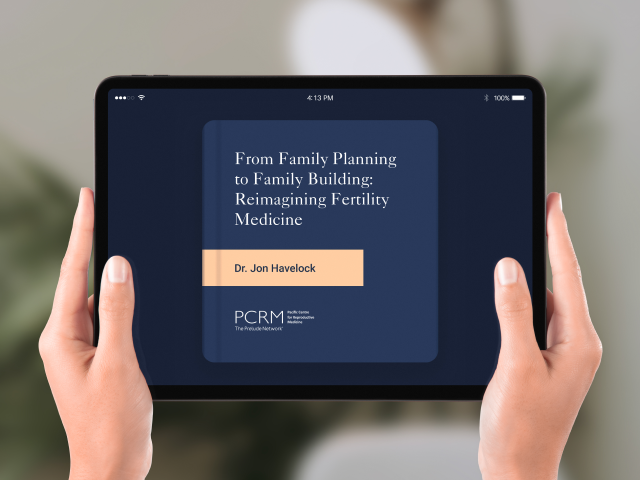
We’re changing the conversation on fertility.
Fertility care has become viewed as a reactive measure — we want to empower folks to start planning their families earlier, and with the right support. Read Dr. Jon Havelock’s “From Family Planning to Family Building: Reimagining Fertility Medicine” to see how we can re-engineer the discussion on fertility and get to better outcomes.
Blog & News
![]() May 14, 2026
May 14, 2026Polyendocrine Metabolic Ovarian Syndrome (PMOS)
Polycystic Ovary Syndrome (PCOS) has officially been renamed to Polyendocrine Metabolic Ovarian Syndrome (PMOS) (as published in the Lancet Medical Journal, …
Read more![]() May 8, 2026
May 8, 2026Coping with Mother’s Day When You’re Struggling with Infertility
Maternal Mental Health Awareness Week | May 4–10, 2026 For many, Mother’s Day is a celebration. But for those navigating infertility, it can feel profoundly …
Read more![]() April 24, 2026
April 24, 2026Secondary Infertility: An Often Overlooked Diagnosis
Recognizing the Silent Struggle During Canadian Fertility Awareness Week During Canadian Fertility Awareness Week (CFAW), much of the national conversation …
Read more
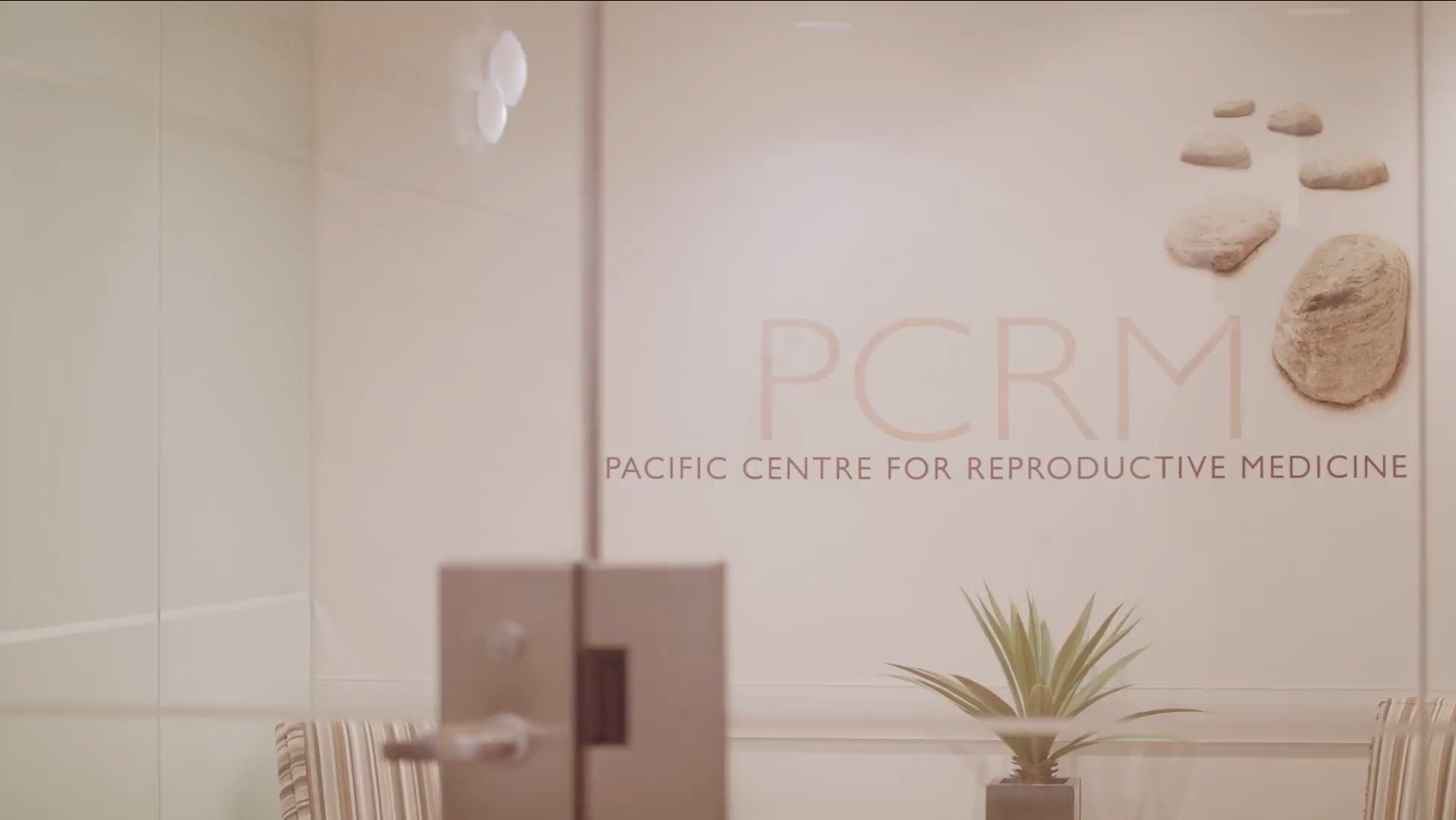
Visit one of our IVF Clinics in Alberta and British Columbia
Ready to start?